
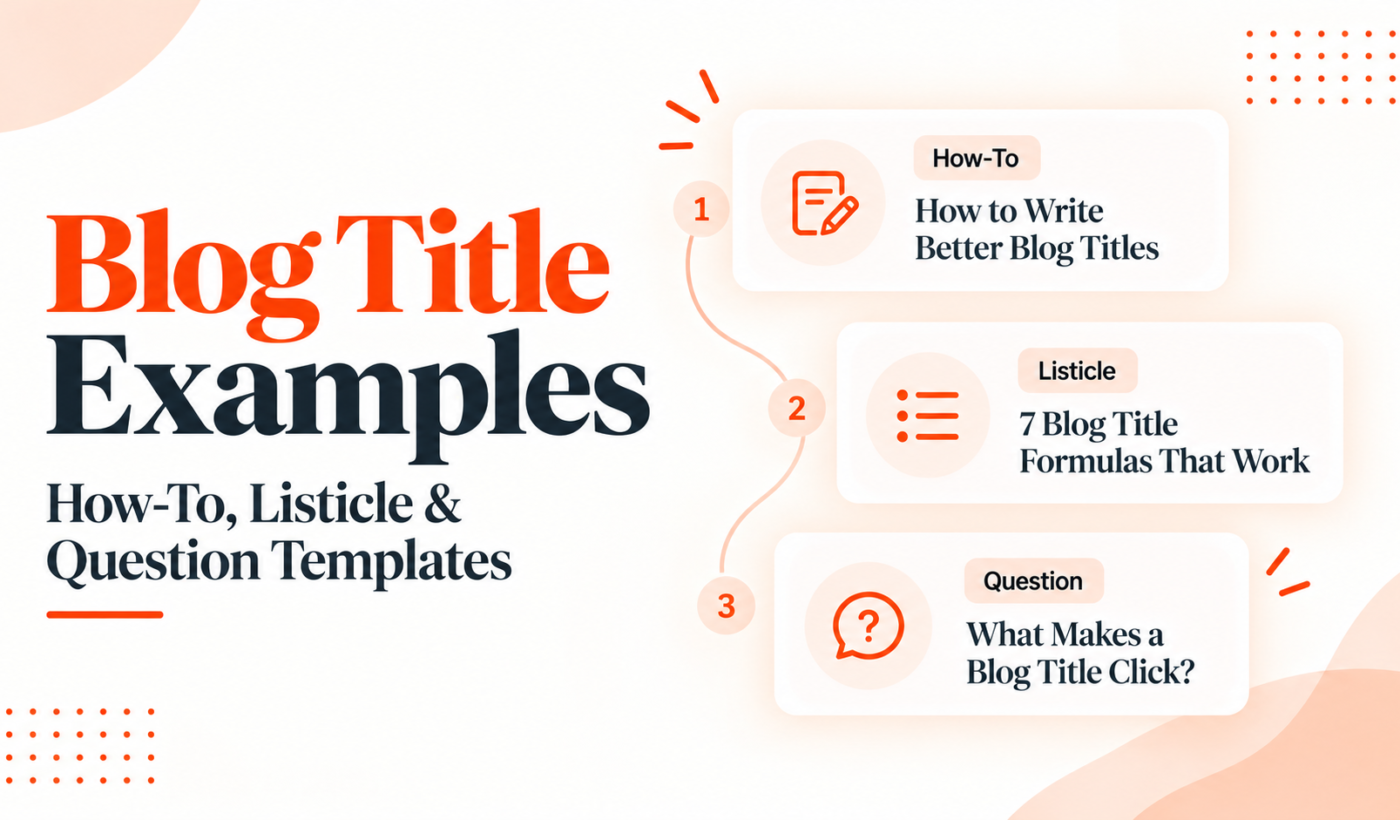
A strong headline affects clicks, search performance and reader satisfaction. This article gives practical blog title examples you can copy, short templates to adapt, and checklists to finalize headlines before you write the post.
If you want instant ideas, try the Generate blog titles for free tool after you read a few examples — then come back to humanize and test the best options.
Why blog title examples matter (quick overview)
Titles and click-through rates: what to expect
Your title is often the first (and sometimes only) chance to get a reader to click. Clear, specific titles tend to earn higher CTRs than vague or overly clever ones. That matters for search click performance and social sharing.
How titles set reader expectations (and reduce bounce)
Titles tell readers what they’ll get. If the headline promises a step-by-step guide, the content should deliver that. Match expectation and delivery to keep visitors reading and lower bounce rates.
When to choose how-to vs listicle vs question formats
Choose the format based on intent: use how-to posts for procedural guidance, listicles for curated tips or resources, and question-format titles when you’re answering a clear user query. Each format attracts different types of search and social traffic.
How to write effective how-to titles
How-to title formula and quick rules (audience + outcome + time/skill)
Use a simple formula: How to [achieve specific outcome] for [audience] in [timeframe or skill level]. Keep it clear, actionable and benefit-focused.
10 how-to title examples the reader can reuse
- How to Write a Freelance Proposal That Wins Clients
- How to Create a Simple Content Calendar in 30 Minutes
- How to Edit Video on an iPhone for Beginners
- How to Optimize WordPress Images for Faster Pages
- How to Build a Basic Email Sequence for New Subscribers
- How to Run a Competitor Keyword Audit in Google Sheets
- How to Price Your First Design Project as a Freelancer
- How to Set Up LinkedIn Notifications to Find Leads
- How to Prepare a One-Page Case Study That Converts
- How to Automate Client Invoices with Free Tools
When to add numbers, time estimates, or skill level
Numbers and time estimates make promises feel tangible. Add skill-level tags (Beginner, Intermediate) when the method depends on prior knowledge. Avoid unnecessary fluff — only promise what your article delivers.
How-to title checklist (readability, keyword placement, clarity)
- Contains the primary outcome (what the reader will learn).
- Includes audience or skill level when relevant.
- Is 50–65 characters where practical for SERP display.
- Uses active verbs and plain language.
Listicle title examples that attract clicks
Listicle templates (number + promise + topic)
Use a template like: [Number] [type of items] that [benefit or result]. Examples: “12 tools that speed up content editing” or “7 proven outreach email templates.”
15 listicle title examples with variations (beginner, advanced, tools, tips)
- 10 Quick SEO Tasks for Small Websites
- 8 Free Tools Every Content Creator Should Try
- 12 Email Templates for Freelancers (Beginner)
- 7 Advanced LinkedIn Strategies for Consultants
- 15 Blog Post Ideas for Busy Entrepreneurs
- 9 Productivity Hacks for Remote Teams
- 11 Design Resources That Won’t Break the Bank
- 6 Troubleshooting Steps for Slow WordPress Sites
- 14 Social Media Caption Prompts to Reuse
- 5 Landing Page Tests to Improve Conversions
- 20 Headline Formulas to Try This Month
- 13 Image Sources for Commercial Projects
- 8 Checklist Items Before You Publish a Post
- 10 Client Onboarding Questions That Clarify Scope
- 7 Tools to Automate Content Repurposing
Balancing curiosity and clarity in listicles
Listicles should promise a clear deliverable. Use curiosity sparingly — a hint of novelty is fine, but avoid vague teasers that don’t explain the benefit.
Listicle title checklist (number choice, specificity, deliverable)
- Choose a credible number (5, 7, 10, 12, 15 are common).
- Be specific about the deliverable (tools, tips, examples).
- Signal freshness if items are timely (2026 update, new resources).
Question post title examples (useful for SEO and social)
Why use a question title (matching searcher intent)
Question titles align well with informational queries. They can match search intent directly and increase the chance of appearing in featured snippets when you answer the question clearly in the first paragraph.
10 question-style title examples that answer common queries
- What Is the Best Free Tool to Generate Blog Titles?
- How Do I Price a Freelance Project?
- Why Is My WordPress Site Loading Slowly?
- Which Email Subject Lines Get the Highest Open Rates?
- How Often Should I Post on LinkedIn as a Freelancer?
- What Should I Include in a Client Proposal?
- How Can I Improve My Blog’s Click-Through Rate?
- When Should I Use a Listicle Instead of a Guide?
- How Do I Find Keywords with Buyer Intent?
- Can I Use AI to Draft Headlines Safely?
How to craft question titles for featured snippets
Phrase the title as the exact question a user might type, then answer it in one concise sentence at the top of the article. Use simple language and include the primary keyword if it matches the question.
Question title checklist (intent match, answerability, keyword phrasing)
- The question reflects a common search or pain point.
- It can be answered clearly and concisely in the article.
- It includes relevant keywords without forcing them.
Title-length, keywords and SEO best practices
Optimal title length for SERP and social (characters vs words)
Aim for 50–65 characters when possible. Search engines display titles by pixel width, so short, clear titles are safer. For social sharing, slightly longer titles can work, but clarity should come first.
Where to put your primary keyword and why
Place the primary keyword near the front when it reads naturally. That helps search engines and users quickly understand the topic. Don’t force the keyword; clarity and readability beat exact placement every time.
Using modifiers and power words without being spammy
Add modifiers like “best,” “easy,” or “2026” to target specific queries, but avoid clickbait language. Promise only what the content delivers.
Quick checks before you finalize a title
- Run a grammar and clarity check with the Grammar Checker.
- Confirm the matching meta description after finalizing the title (see Meta Description Generator).
- Make sure the title matches the article’s angle and content.
- Check for duplicate or overly similar published titles on your site.
Testing, templates and workflows
How many title variations to draft (and why)
Draft 5–10 variations for each article. That range gives you options without wasting time. Use the best-performing phrases as starting points for A/B tests on social or email.
Simple A/B tests on social and email
Test two headline variants on a small audience split for emails or social ads. Track CTR and engagement — the clearer, more specific headline usually performs better.
Workflow: draft titles, humanize, test readability, finalize
Start with a title generator for raw ideas, then humanize the strongest candidates, paraphrase for alternate phrasings, and run a final grammar check.
Tools and templates (how to generate and refine titles fast)
Use a title generator for raw ideas, then humanize and polish. Try the Blog Title Generator for raw headline ideas to create multiple options quickly.
Humanize AI drafts with the Humanize AI text to make headline variations sound natural tool, and produce alternative phrasings with the Paraphrasing Tool to create quick title variations.
After you finalize a headline, write a matching meta description using the Meta Description Generator for writing matching meta snippets. For polishing leads and subheads, see our Paragraph Rewriter Examples for polishing headlines and leads and the How to Humanize AI Blog Intros (before & after examples) guide.
If you write headlines for client work or proposals, apply the same principles to subject lines and openings — try the Upwork Proposal Generator (tool landing) to see headline skills applied to proposals.
Title writing checklist (copy-ready)
- Is the primary outcome clear in one glance?
- Does the title contain the primary keyword where natural?
- Is the length suitable for SERP display (50–65 characters preferred)?
- Does the headline match the article’s promise and structure?
- Have you run grammar and clarity checks (see Grammar and Clarity Checklist for Blog Posts)?
FAQ
What makes a strong how-to blog title?
A strong how-to title names the outcome and the audience, and when useful, adds a timeframe or skill level. Keep it actionable and specific so readers know what they’ll learn.
How long should a blog title be for SEO and social sharing?
Aim for 50–65 characters for search results. Social platforms allow longer titles, but prioritize clarity and front-loaded keywords for both channels.
Should I include keywords in my blog title or keep it purely reader-focused?
Do both. Use keywords naturally near the start when possible, but never sacrifice clarity or honesty. Titles that serve readers tend to perform better long-term.
How many headline variations should I create before choosing one?
Draft 5–10 variations. That range balances speed with a healthy set of options for A/B testing and refinement.
Can I use AI tools to generate titles and still keep them authentic?
Yes. Use a generator for ideas, then humanize and paraphrase. Tools like the Humanize AI text to make headline variations sound natural and the Paraphrasing Tool to create quick title variations help keep headlines authentic.
Conclusion and next steps
Pick one format — how-to, listicle, or question — based on your reader’s intent, draft several variants, and run a quick clarity and grammar check before publishing. If you need ideas fast, try the Blog Title Generator for raw headline ideas, then refine with the Humanize AI text to make headline variations sound natural and the Meta Description Generator for writing matching meta snippets.
If you’re a freelancer writing proposals or subject lines, try the Generate a free personalized Upwork proposal to see how concise, clear headlines translate to better openings and subject lines.